VENOMOUS · PROTECTED
The adder
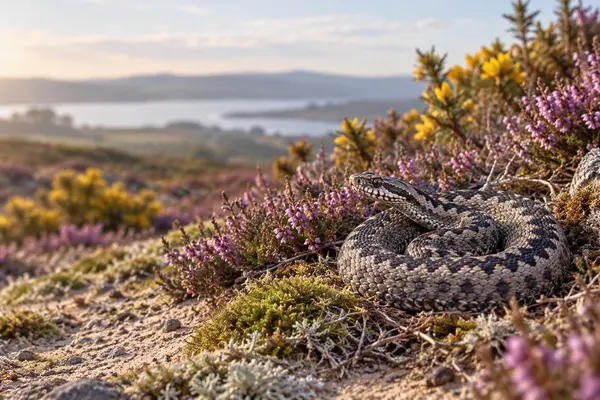
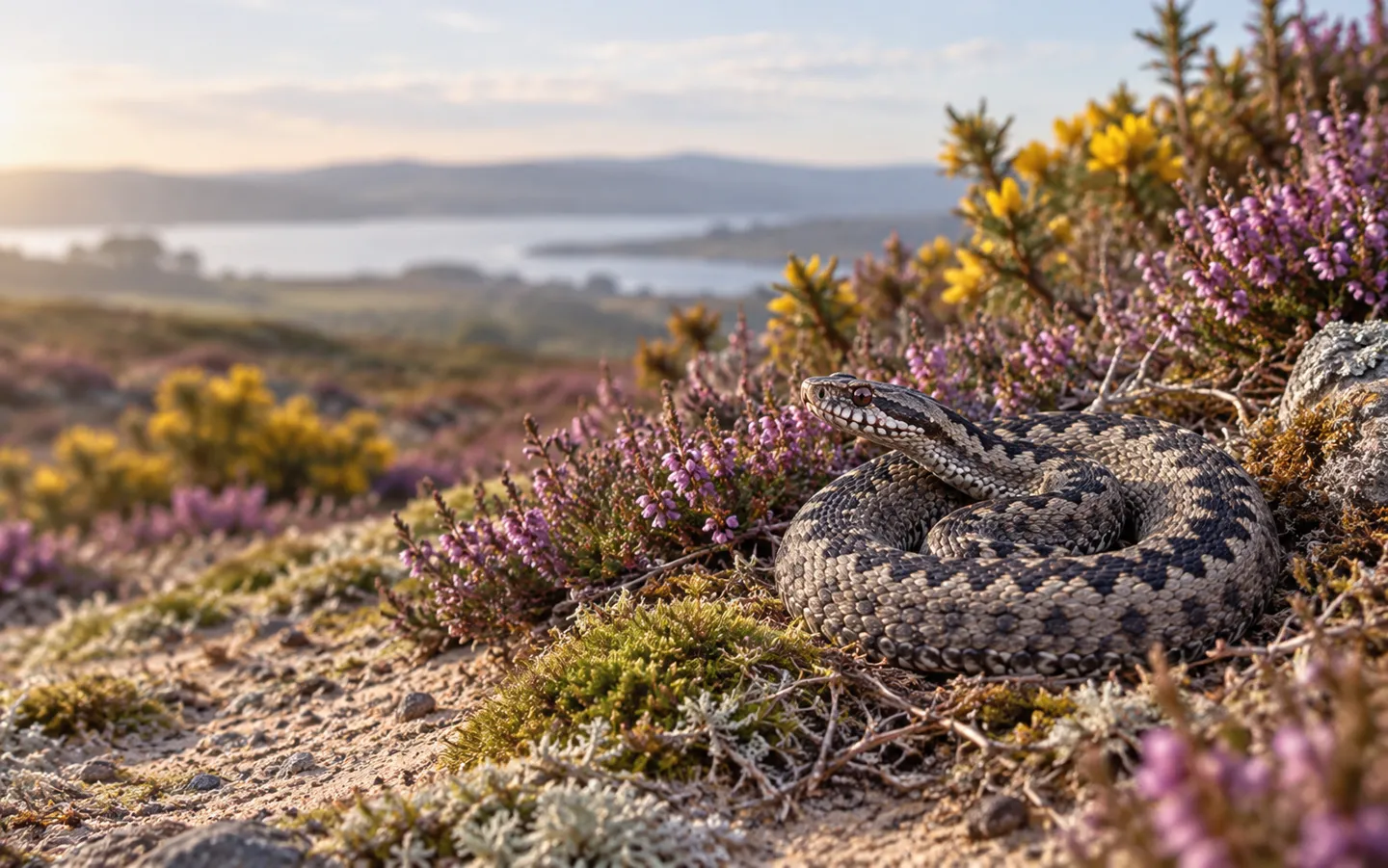
Grey to reddish-brown with a dark zig-zag and a red eye. Found from the south coast of England to the far north of Scotland.
How risky is it? doodlesnake
BRITAIN'S NATIVE SNAKES
Britain has only three native snakes, and only one of them is venomous.
The adder, the grass snake and the rare smooth snake share our heaths, ponds and gardens with a fourth look-alike that is not a snake at all. Here is how to tell them apart, in plain English and from a respectful distance.
Plain English, with the sources linked.
ZIG-ZAG red eye
Which one did you see?THE SHORT ANSWER
A bold zig-zag means adder.
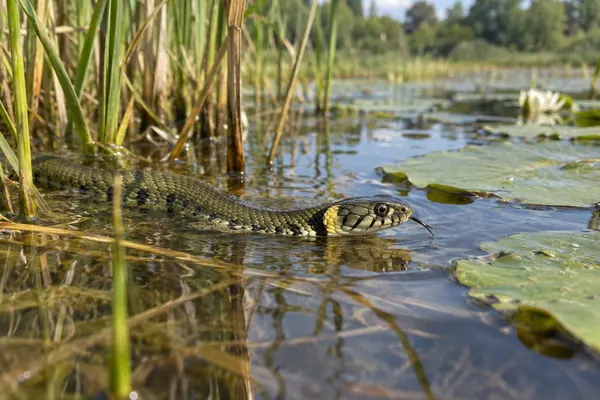
A yellow collar means grass snake.
VENOMOUS · PROTECTED
Grey to reddish-brown with a dark zig-zag and a red eye. Found from the south coast of England to the far north of Scotland.
How risky is it?HARMLESS · PROTECTED
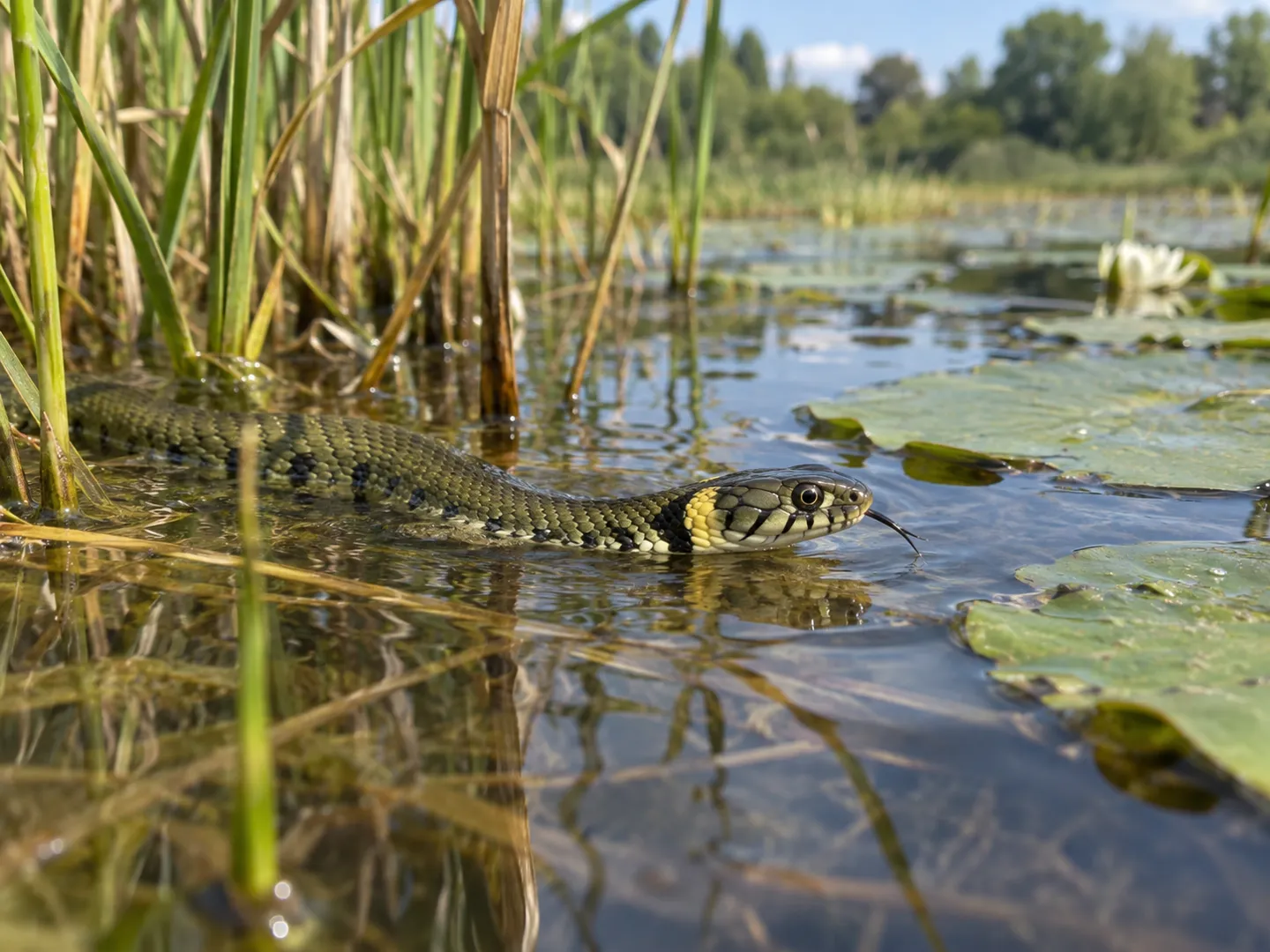
Olive green with a yellow and black collar. Britain's longest snake, often swimming in ponds and laying eggs in compost heaps.
Snakes in the gardenNOT A SNAKE
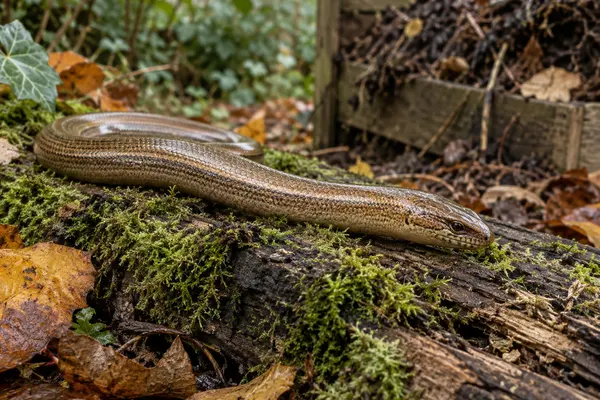
Smooth, shiny and golden-grey, it is a legless lizard that blinks. It is the snake look-alike most people meet.
Compare all four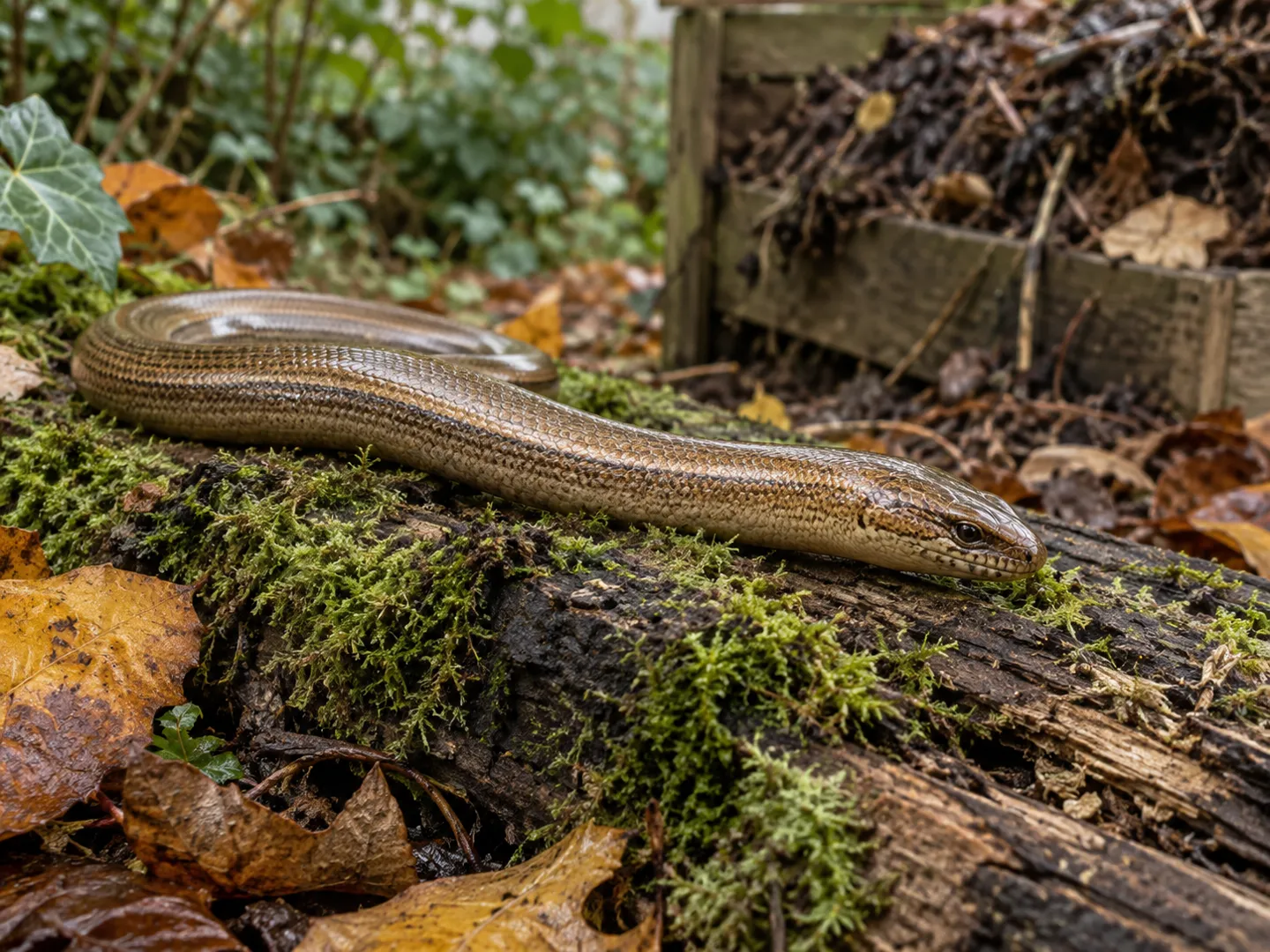
IF YOU MEET ONE
A native snake in your garden or out walking is best left alone. Watch from a distance and let it move on in its own time.
Look for the zig-zag and red eye of an adder, or the yellow collar of a grass snake. There is no need to get close to tell.
Grass snakes are drawn to compost heaps and may lay their eggs there, so turn a heap gently, especially in summer.
The RSPCA suggests contacting it only if a native snake is sick or injured, or if you see an escaped pet snake that is not native.
TWO NUMBERS WORTH KNOWING
The adder is more at risk from us
than we are from it.
14 the last in 1975
Deaths recorded in Britain since 1876
Poisons centres hear about an average of 100 human cases a year, mostly between June and August. In about 70% of patients the effects were negligible or purely local, and antivenom has been supplied to NHS hospitals since 1969.
ADDER BITES · BMJ 2005
90%
Survey sites with fewer than 10 adders
Eleven years of the citizen-science survey Make the Adder Count found most adder populations are small. The researchers warned that, if trends continue, adders could be restricted to just a few sites within 10 to 20 years.
ADDER NUMBERS · 2019
Both numbers point the same way: the adder deserves caution and space, and it needs protection more than it needs fear.
A QUICK ID CHECK
Pick the animal you think you saw and compare the clues. Descriptions come from The Wildlife Trusts, the RSPCA and Amphibian and Reptile Conservation.
Colours vary, and black adders are sometimes seen. If in doubt, treat it as an adder and give it space.
SNAKE FACTS
The adder, grass snake and smooth snake are Britain's only native snakes. The smooth snake is the least widespread, living on heaths in southern England.
The grass snake can grow to around 150 cm, about twice the length of an adder. It is the only native snake that lays eggs, often in compost heaps.
Female adders keep their eggs inside the body and give birth to roughly 6 to 20 young in August or September. Adders hibernate from about October to February.
Snakes do not blink. The slow worm has eyelids and does, which is one of the easiest ways to tell this legless lizard from a snake.
Adders, grass snakes, slow worms and common lizards are protected from intentional killing, injuring and sale under Schedule 5 of the Wildlife and Countryside Act 1981.
QUICK QUESTIONS
Short answers to the questions people ask most.
Three are native: the adder, the grass snake and the smooth snake. The adder is the only venomous one. The smooth snake is the rarest, found on a few heaths in southern England. The slow worm looks like a snake but is a legless lizard.
Yes. All three of the UK's native snakes live in England. The RSPCA describes the adder as widespread but declining across the UK, the grass snake as widespread in England and Wales, including gardens, and the smooth snake as localised to heaths in the south of England. Only the adder is venomous.
Look for the pattern and the neck. An adder is grey to reddish-brown with a bold dark zig-zag down its back and a red eye. A grass snake is usually olive green with a yellow and black collar behind its head and is often found near water.
Adders are venomous, but deaths are very rare. A 2005 review in the BMJ counted only 14 deaths in Britain since 1876, the last in 1975, and found that in about 70% of patients the effects were negligible or purely local. Antivenom has been supplied to NHS hospitals since 1969.
No. It is a legless lizard. Unlike a snake it has eyelids and blinks, its head flows into its body without a clear neck, and it can shed its tail if threatened.
Yes. The adder and the grass snake, along with the slow worm and common lizard, are protected from intentional killing, injuring and sale under Schedule 5 of the Wildlife and Countryside Act 1981.
Updated
A NAME WITH A WIGGLE
doodlesnake.com is part of the DoodleSale portfolio. It isn't in an auction right now, but you can ask about leasing it.